
⊰ Dead Pigeon ⊱
My friend Emily called me and said that a film she was working on had a prop that was exactly my kind of thing. I was skeptical, until she told me what they needed: a dead pigeon. After I made sure I had heard her correctly, I agreed that it was indeed exactly my kind of thing, and yet she still had to convince me to take on the project.
The requirements were that the pigeon won’t be white, and that it could appear intact while also having a removable section.
It made sense to me to choose the wing that would conceal an injury underneath.
I asked her for more details, such as:
My question: What was the cause of the pigeon’s death?
Her answer: A dog bite.
Q: How much time has passed since it died?
A: Not long.
This was important to me in deciding how “fresh” the injury should look, whether the blood would already have clotted, and especially how stiff the body should be before rigor mortis sets in.
Since the pigeon was meant to be a fresh corpse and I wanted to keep the prop flexible, I connected the head to the body with a fabric strap so it would flop naturally when moved. Later, I attached the neck feathers around the fabric, creating something similar to a feather-ball.
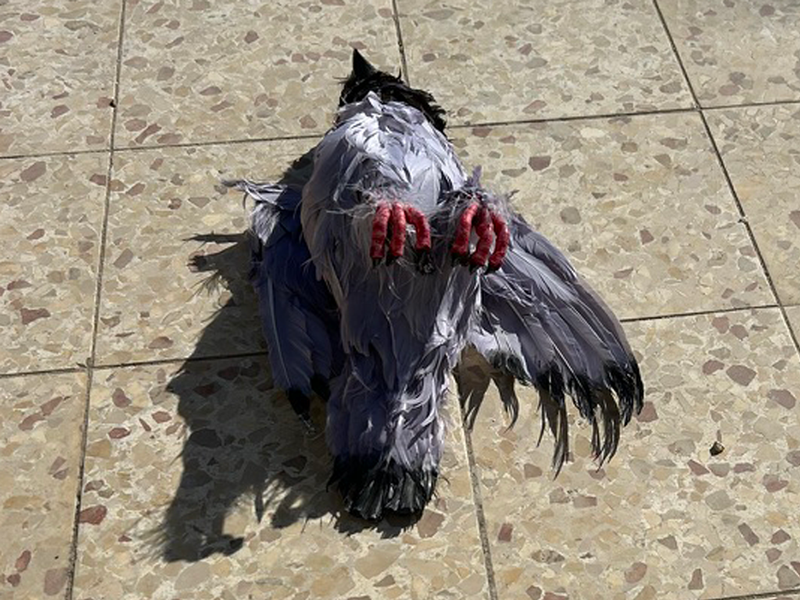
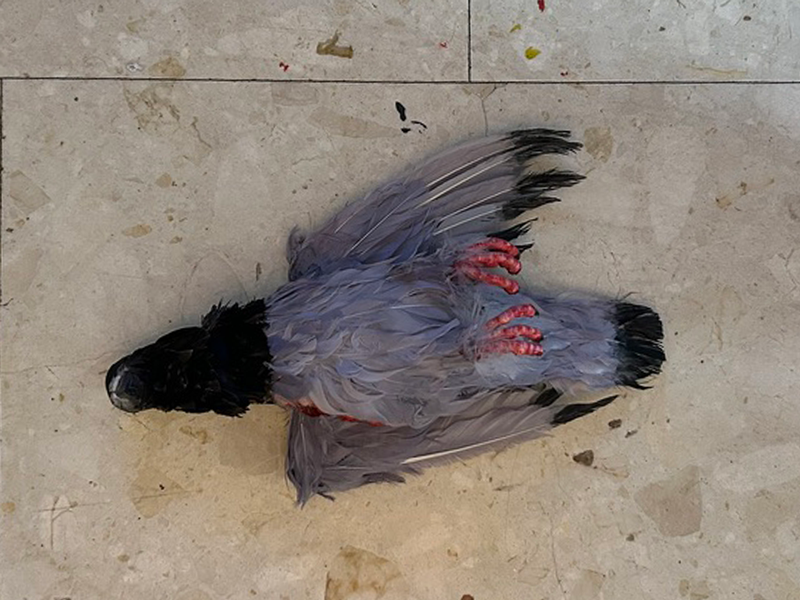
It wasn’t easy to find photos in which the injury wasn’t visible.
Those who don’t mind seeing it can click on the blurred images farther down.
⊲ Stages in creating a dead pigeon prop [14] ⊳
-
![]()
I felt the pigeon was missing something to make it more realistic, so I added droppings (white, black and a bit of green) and the cloacal opening.
-
![]()
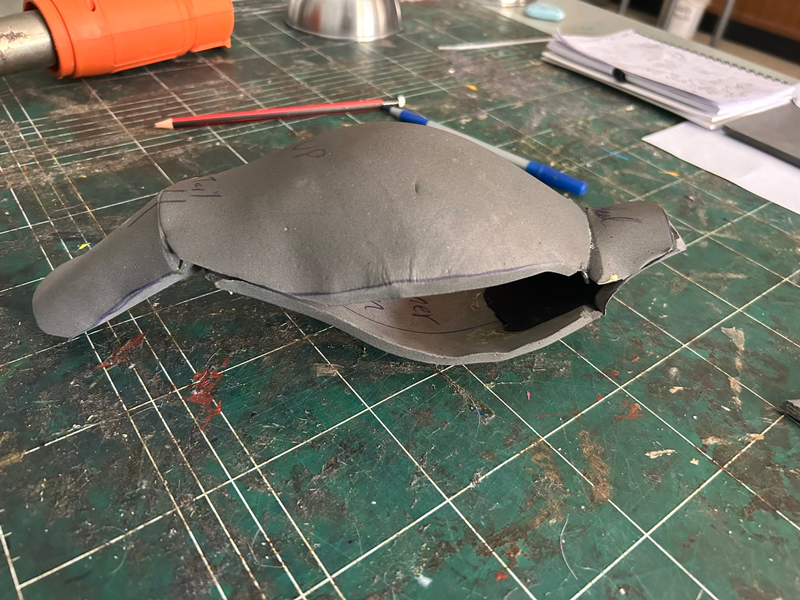
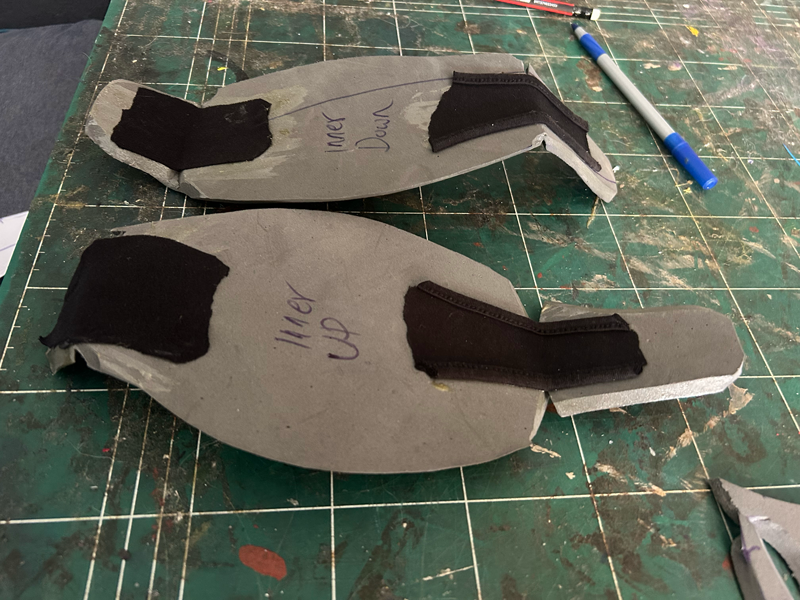
The wing was attached to the body using two round magnets with opposite polarities, ensuring it could only be attached in the correct orientation.
-
![]()
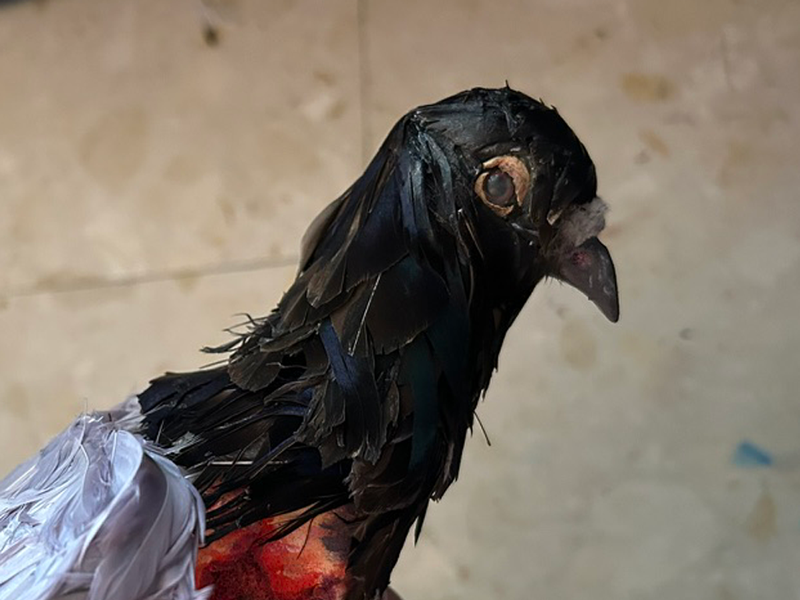
Making realistic eyes is hard. The feathers are ruffled and disheveled in a way that suited a pigeon chewed by a dog.
-
![]()
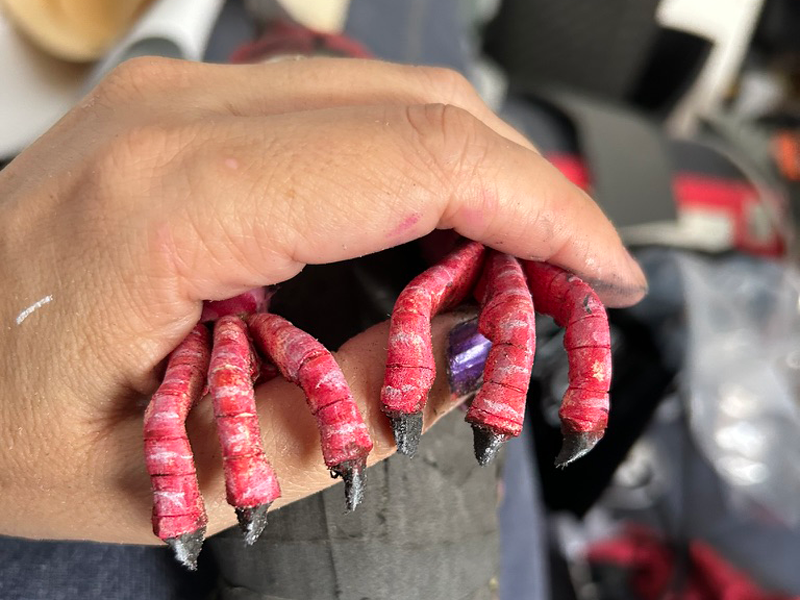
The legs after an additional painting.
-
![]()
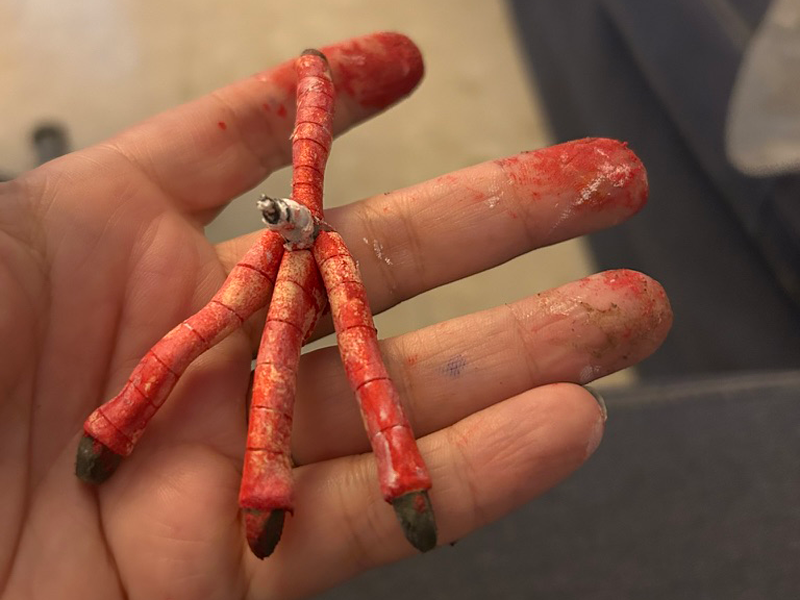
The legs with wire armatures inside.
-
![]()
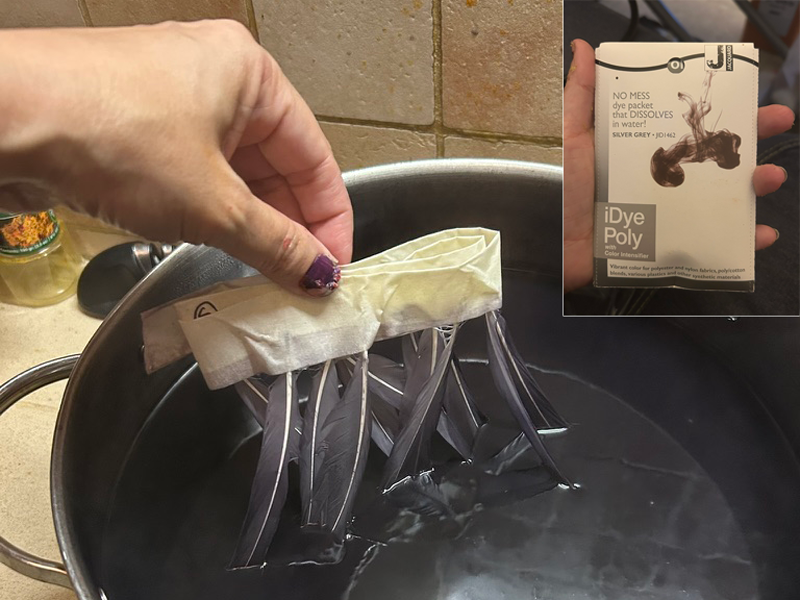
Dyeing the feathers by boiling with silver-gray fabric dye
-
![]()
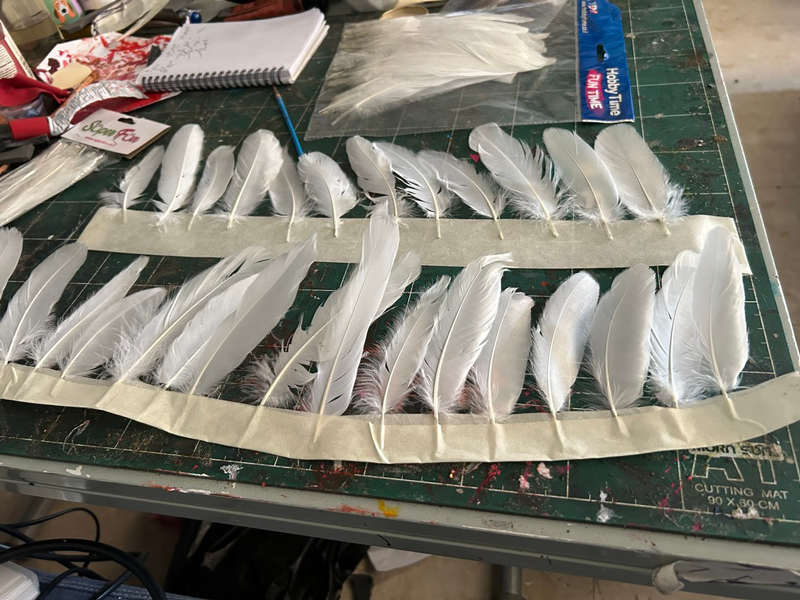
Most of the feathers at the craft store were white. I attached them to a strip in a Native American headdress-like fashion in order to dye them.
-
![]()
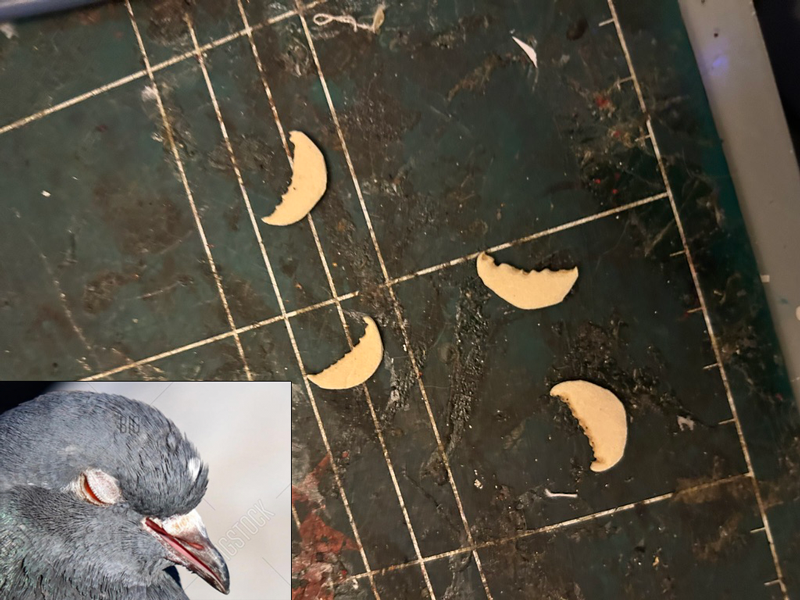
Serrated eyelids, one of the things I discovered while staring at photos of pigeons.
-
![]()
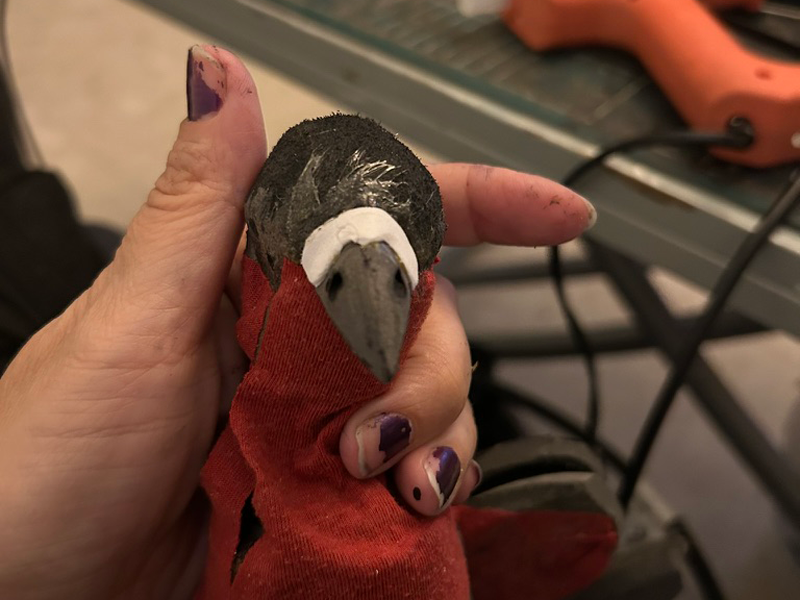
The cere above the beak
-
![]()
The base structure of the pigeon. The head is attached with fabric to allow for natural movement.
-
![]()
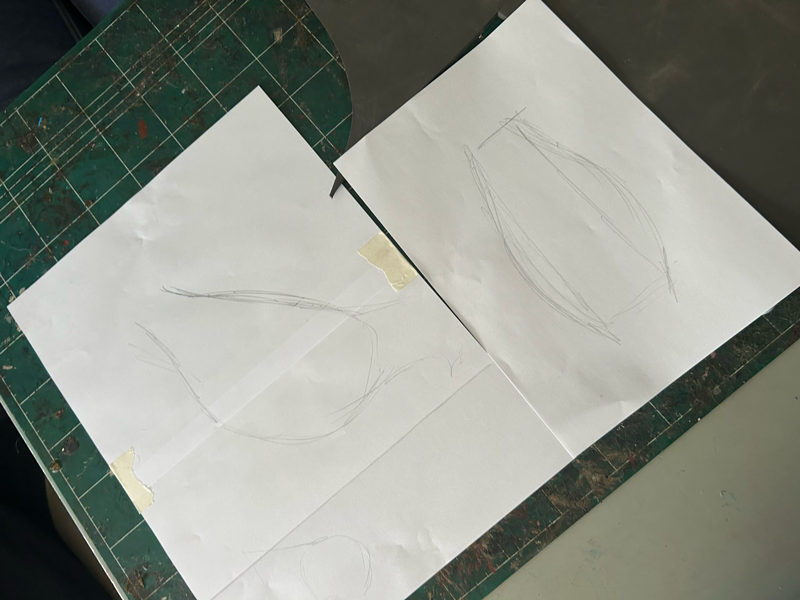
Beginning work on the body.
-
![]()
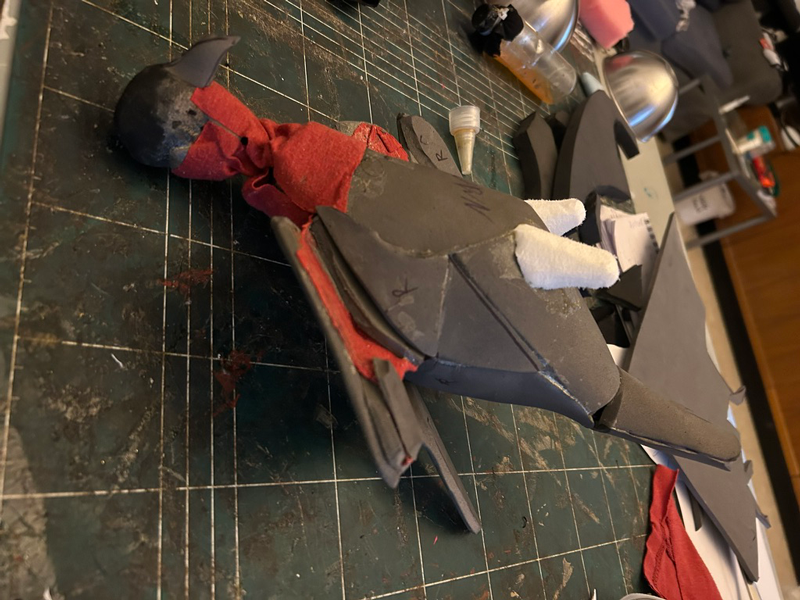
Body parts.
-
![]()
I didn’t account for the added feathers making the pigeon larger, so it turned out quite plump.
-
![]()
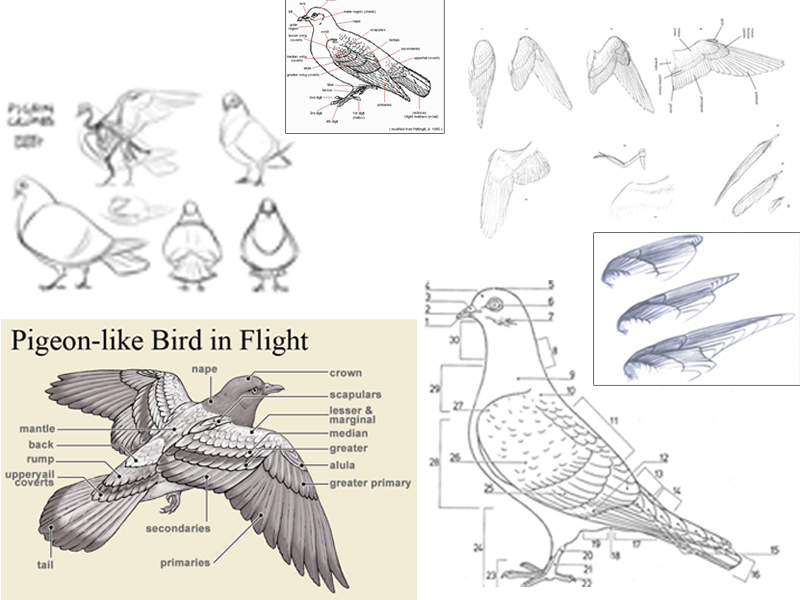
A small part of the research on pigeons and wing anatomy.
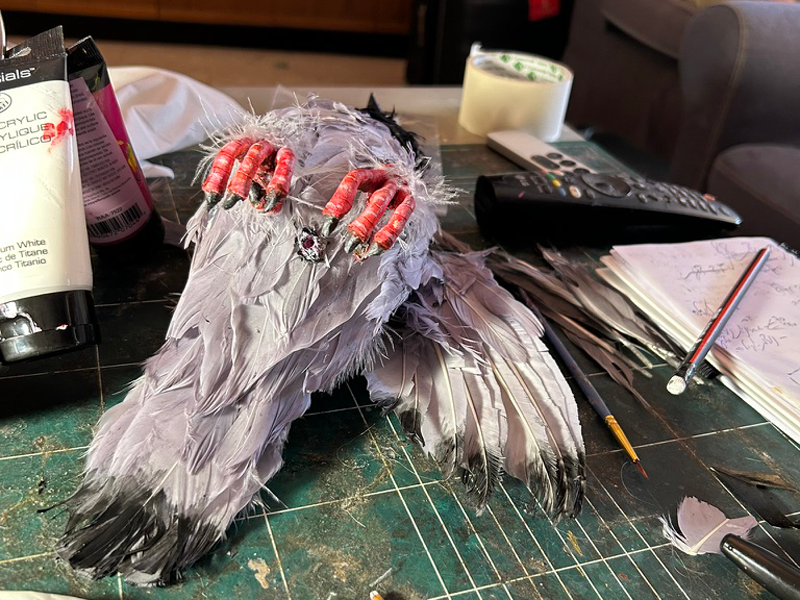
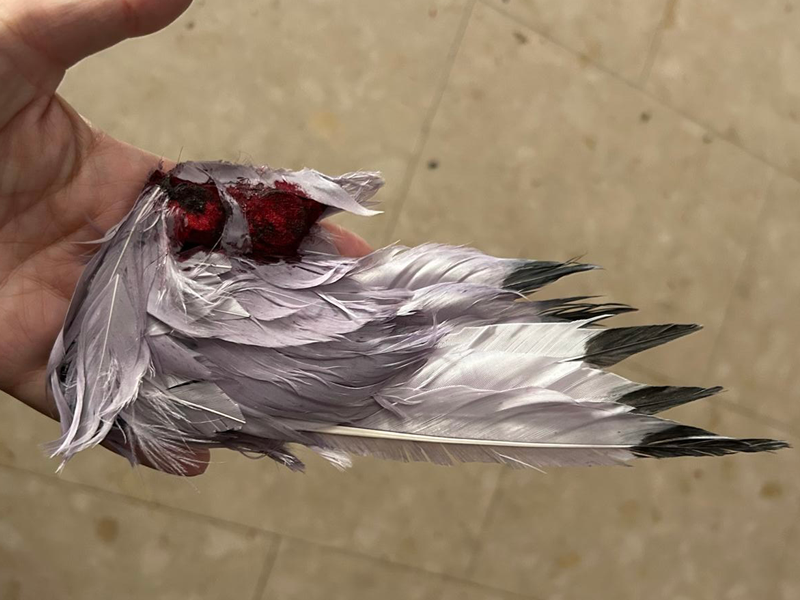
It was very important to me that the exposed flesh in the wound be as anatomically accurate as possible.
True to my background as a Life Sciences (Biology) graduate, I invested a lot of attention in the different tissues: from the skin, through the flight muscles (pectoralis major), and all the way to the exposed rib bones.
Combined with years of experience working as an assistant in a veterinary clinic, I had been preparing for this moment. As befits a dog bite, the wound was irregular and rough, with the deepest damage concentrated in the center.


Those who are resilient enough can click on the images.
I understand it’s not for everyone.
A glimpse of some of the anatomical reference materials I studied while planning the injury.
A separate link out of consideration for sensitive viewers.
During that period, I collected countless small feathers from the street that could be scattered around the scene. Pigeons actively avoided me. They seemed less than enthusiastic about the way I studied and stared at them.
I had assumed the bird would be lying on its back with its feet in the air. As I glued feather after feather onto the area between the wings on its back, I remember thinking it was unnecessary work because nobody would ever see it anyway. Then I saw photos from the set (gore warning) and discovered they had placed it on its belly.
Good thing I overdo things.
After I showed my sister what I was working on,
she sent me this (Translated from Hebrew):
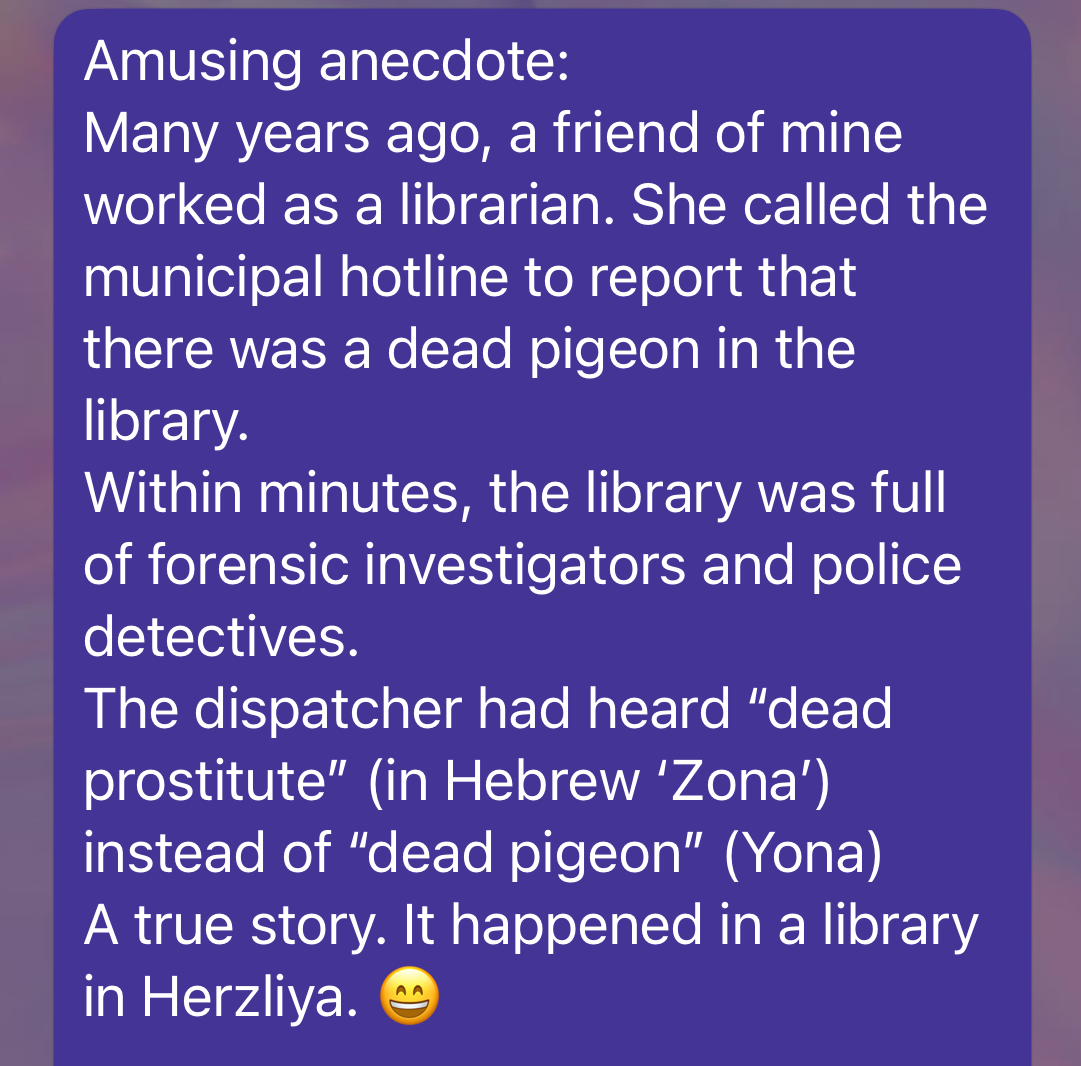
I was also an extra in this film. Right after the director called “cut” on the final take of the scene I participated in, we were interrupted by a rocket siren (“Operation” Swords of Iron 2024, pre-Iran).
Maybe I’ll write about that in a separate post someday.